Galaxy Division: Space Battles
- 4.5
- Rating
- 100.00K
- Installs
- Free
- Price
 Analysis by App-foxy
Galaxy Division: Space Battles is a free action game from Armada Forge Games that aims for a quick, accessible space-combat experience. I approached it as the kind of title you might open when you have a few minutes to spare, rather than as a deep simulation that demands a long session. Its central appeal is easy to understand: get into the action, make fast decisions, and enjoy the feeling of fighting among the stars without paying an entry fee.
What makes the game worth examining more closely is not just its space setting, but the balance between immediate entertainment and long-term commitment. A free download is inviting, yet the presence of optional purchases means the way you progress and spend deserves attention. I found that the most useful question is not simply whether the game looks exciting, but whether its pace, pressure and purchase model fit the way you personally like to play.
What playing Galaxy Division feels like
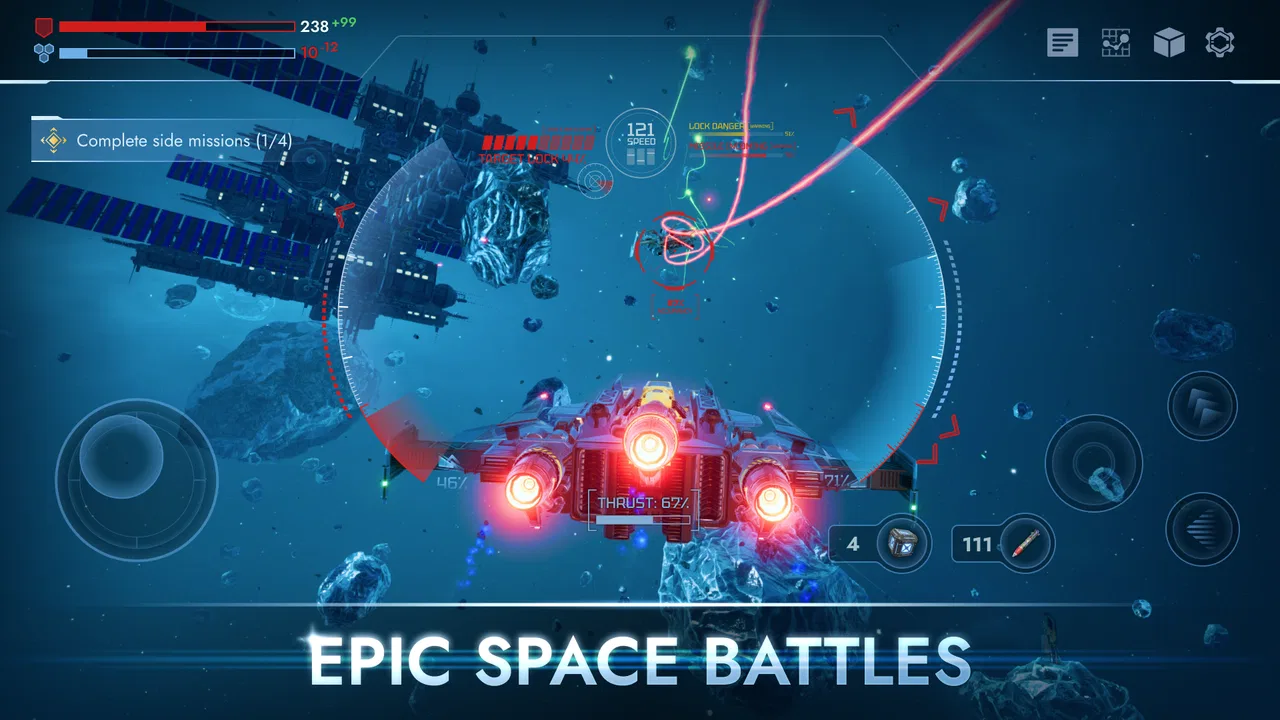
The game sits firmly in the action category, and that gives it a different expectation from a slower strategy title. I would recommend going in ready for direct interaction rather than a heavily menu-driven experience. The space-battle theme provides a clear setting, while the short store summary presents it as something you can start immediately instead of a game that needs extensive preparation.
You May Also Like

 AccuWeather: Weather Radar
AccuWeather Review: A Quick, Clear Forecast for Everyday Decisions
For everyday plans, the best forecast is the one you can understand quickly. AccuWeather makes rain timing, radar, and local conditions easy to act on, with a few trade-offs.

 Hill Climb Racing
Why Hill Climb Racing Still Turns Crashes Into One More Run
A tiny car, a bumpy hill and one more upgrade: Hill Climb Racing keeps resurfacing because its simple chaos makes every near-miss feel personal.

 AliExpress - Shopping App
AliExpress Makes Global Shopping Feel Personal, but Shoppers Bear the Risk
AliExpress turns a global marketplace into a pocket-sized discovery engine. Its reach is useful, its shopping loop compelling, and its trade-offs easy to miss.

 Lords Mobile: Kingdom Wars
Lords Mobile Is a Kingdom-Building Routine, Not a Quick Match
A case-by-case verdict on the building, battles, device demands, and social commitments that make Lords Mobile rewarding for some players and exhausting for others.

 PDF Scanner app - TapScanner
TapScanner Makes Paperwork Easier to Capture, Check, and Share
TapScanner makes scanning with a phone feel less like a rescue operation and more like a dependable step in getting work done. Its capture tools are useful, though not flawless.

 Block Blast!
 Shows How Much a Puzzle Game Can Leave Out
A quiet grid game shows why puzzle players increasingly value instant clarity, repeatable skill and low-pressure play—and where the genre still needs to catch up.
More From Our News Desk
View All News


That accessibility is one of its strongest qualities. If you are new to mobile action games, the concept is easy to grasp: you are there to take part in battles, not study a complicated fictional universe before the fun begins. I also think it suits players who like science-fiction presentation but do not necessarily want a demanding simulator with technical controls and lengthy sessions.
At the same time, a simple premise can create a high standard for moment-to-moment play. When a game focuses on fast space combat, responsiveness and clarity matter more than a long explanation of its setting. I paid attention to whether the experience felt easy to enter and whether the action seemed suited to repeated sessions. That is where the game’s free-to-start structure becomes useful: you can try the basic rhythm before deciding whether it deserves a permanent place on your phone.
The current release is version 1.0.9313, and it requires Android 9 or later. That makes checking your device version a sensible first step before downloading. The game is marked for Everyone, which makes it easier to consider for a broad audience, although an age label should never be confused with a promise that every player will enjoy the same level of action or spending pressure.
A practical game for short breaks
I can imagine using Galaxy Division during a commute, while waiting for an appointment, or at the end of the day when I want something more active than scrolling through social media. The important advantage in that situation is low friction. A game that lets me get into a space battle quickly has a clear role in my daily routine, especially when I do not want to commit to a long story campaign.
My practical tip is to begin with a few sessions in which you focus only on learning the feel of the combat. Do not make an early purchase simply because the first challenge seems difficult. First decide whether you enjoy the basic action when you are still using the options available without spending. That gives you a much better reference point for judging later progress.
This also helps separate two different reactions. You may enjoy the game’s controls and presentation but dislike the way advancement feels. Alternatively, you may find the action entertaining but too repetitive for regular play. Those are useful conclusions, and both can be reached without treating the purchase system as the main attraction.
Free to start, but not free of spending decisions
Galaxy Division costs nothing to download, which removes the biggest barrier to trying it. However, it includes in-app purchases ranging from $0.99 to $99.99 per item. That is a wide enough range to make spending discipline important, particularly for younger players or anyone who tends to buy impulsively when a game places pressure on progress.
I want to be precise here: the purchase range tells me that optional paid items exist at several price levels, but it does not by itself prove that the game is unfair or that spending is required. I would not claim that purchases guarantee victory, nor would I assume that every item has the same effect. The responsible approach is to treat the free entry as a trial and to make each later purchase only after understanding what it changes for your own play.
For families, the Everyone rating is reassuring from a content perspective, but spending controls still matter. If a child can access the game, I would set device-level purchase protection before handing over the phone. That is a more useful precaution than relying on the low-cost starting point, because the presence of a high-priced item means several small decisions can become expensive if they are made without attention.
One of my strongest recommendations is to keep a simple personal rule: never buy during a frustrating battle. Difficulty can make any offer feel more valuable than it really is. Close the purchase screen, play again later, and ask whether you still want the item when you are calm. This small pause protects the free-to-play advantage while reducing the chance that the game’s pressure shapes your budget.
Progress, pressure and the question of fairness
The real test for a free action game is what happens after the first excitement fades. A satisfying progression loop should make improvement feel connected to better decisions, not merely to opening the wallet. In Galaxy Division, I would judge the experience by watching whether my results improve when I learn the action, rather than only when I obtain something new.
This is especially important in space battles, where a player wants to feel responsible for a successful encounter. If a difficult moment teaches positioning, timing or target selection, it can be rewarding even when I lose. If the only practical lesson is that I should purchase an advantage, the experience becomes less satisfying. That distinction is the heart of the game’s long-term appeal.
My advice is to keep track of what actually causes a setback. Was the problem a rushed decision, a lack of familiarity with the controls, or a genuine progression barrier? Writing down that reason after a difficult session may sound excessive, but it is useful when a game includes optional purchases. It prevents me from confusing temporary frustration with evidence that spending is necessary.
How I would evaluate competitive fairness
Fairness matters most when players are compared directly, whether through rankings, shared challenges or any other competitive setting. I would be cautious about treating paid access as proof of skill. If purchases affect battle strength, then a player’s result may reflect both practice and spending. If they affect convenience instead, the competitive impact could be smaller. Without a clear understanding of each item’s role, it is better to avoid strong claims in either direction.
That uncertainty does not make the game unusable, but it changes how I would play it. I would enjoy the action for its own sake and avoid attaching too much importance to rankings until I understood whether money creates a meaningful advantage. This is a useful distinction between personal play and competitive play: a purchase may feel acceptable for saving time in a solo context but uncomfortable if it changes the terms of a contest.
Players who care deeply about equal conditions may prefer a premium action game with one upfront price, or a title whose competitive rules clearly separate paid progression from skill-based results. Those alternatives can offer a cleaner relationship between practice and performance. Galaxy Division is a better fit for someone comfortable trying a free game first and deciding later how much, if anything, to spend.
Spending without losing control of the experience
The safest way to approach the purchase system is to treat every item as optional until proven useful through play. I would not buy several items at once, and I would not assume that the most expensive option is the best value. A higher price does not automatically mean a better experience, especially when the main question is whether the underlying combat is enjoyable.
A second practical tip is to test the game across different moods and session lengths before spending. A title can feel exciting in a first ten-minute session but less appealing after repeated play. Conversely, a game that seems basic at first may become more enjoyable once its controls feel familiar. Waiting gives you information that a purchase screen cannot provide.
There is also a useful trade-off between convenience and satisfaction. If a paid item reduces waiting or makes progress faster, it may help a player with limited free time. But faster progress can also shorten the period in which the game feels earned. I would only consider paying when the item solves a specific annoyance without removing the decisions that make the battles enjoyable.
Who should try it, and who should skip it
I think Galaxy Division is best suited to players who want a free space-themed action game that can be tested without an upfront commitment. It is a sensible choice for someone who enjoys short bursts of combat, likes discovering whether a game’s rhythm fits them, and can ignore optional offers when they are not worthwhile.
It is less suitable for players who dislike in-app purchases on principle, even when the game itself is free to begin. It may also frustrate people looking for a carefully balanced competitive environment where every participant starts with exactly the same practical options. For those players, a paid game or a clearly defined non-purchasable competitive model would be a better match.
I would also skip it if your main goal is a rich, slow science-fiction campaign. The game’s identity is built around action, so anyone searching for extensive narrative exploration, complex fleet management or a long strategic planning experience should look elsewhere. Choosing a different genre is not a criticism of this title; it is simply a matter of matching expectations to the game’s purpose.
What I would check before committing to regular play
There are a few questions I would answer through use rather than assumption. First, does the combat remain enjoyable after the novelty of the space setting wears off? Second, can I make meaningful progress through play alone? Third, do paid items feel like convenience, customization or a route around difficulty? These questions are more revealing than the existence of a purchase button by itself.
I would also check how the game fits my phone habits. The Android requirement is clear, but device compatibility is only the beginning. A player should consider available storage, battery comfort and whether the game’s session pattern suits their connection and schedule. I would avoid starting a battle when I know I may need to close the app immediately, because action games are less enjoyable when played in a constant rush.
Another useful test is to let a friend try the same early section without explaining your opinion first. If both of you enjoy the action for different reasons, that suggests the core experience has flexibility. If both of you immediately focus on the next purchase offer, that tells you something important about the game’s pressure, even if the title remains technically playable for free.
My trust verdict on Galaxy Division
The game has a credible starting proposition: a free action experience with a space-battle theme, broad age labeling and enough visibility to attract a substantial group of players. It holds a 4.5 average from around 1.7 thousand ratings, with more than a hundred written reviews and over 50 thousand installs. Those figures show that people are trying it and responding positively overall, although they cannot tell me whether the game will suit my individual tolerance for repetition or purchases.
My own verdict is cautiously positive. I like the fact that the entry cost is low, because it lets players judge the action before spending. I also appreciate that the game can occupy the short-session space between larger console-style releases and more involved strategy games. Its strongest trust signal is not the promise of instant excitement, but the ability to make a personal decision without paying first.
The caveat is the purchase range. An item costing $0.99 is a very different commitment from one costing $99.99, and I would not treat them as interchangeable. The game deserves a fair trial, but players should keep their spending boundary visible and avoid assuming that payment is the natural next step after every setback. For children, purchase protection is essential; for adults, a fixed budget and a cooling-off pause are sensible.
In the end, I would recommend Galaxy Division to a friend who wants to sample mobile space combat and is comfortable making deliberate choices around optional purchases. I would not recommend it to someone seeking a completely purchase-free experience or a guaranteed level playing field in every competitive situation. My advice is simple: play first, spend only for a clearly understood benefit, and leave if the pressure becomes more noticeable than the fun.
That approach gives the game the opportunity it deserves without giving the purchase system control over the decision. Armada Forge Games has created a title that is easy to approach, and its free price makes experimentation straightforward. Whether it becomes a regular game depends on the quality of the repeated action and on how comfortably you can keep your own limits. For the right player, that is enough to make it worth trying; for everyone else, the same trial makes it easy to move on without regret.
FAQs for Galaxy Division: Space Battles
01What is Galaxy Division: Space Battles?
Galaxy Division: Space Battles is a captivating space combat game available on Android and iOS. Players engage in thrilling battles across the galaxy, commanding starships and strategizing to defeat opponents. The game offers an immersive experience with stunning graphics and a variety of missions to complete.
02Is Galaxy Division: Space Battles free to play?
Yes, Galaxy Division: Space Battles is free to download and play. However, it offers in-app purchases that allow players to enhance their gaming experience. These purchases can provide additional resources, ship upgrades, and special items that can be advantageous in battles.
03What are the system requirements for Galaxy Division: Space Battles?
For Android users, a device running Android 5.0 or higher is recommended. iOS users should have iOS 11.0 or later. Both platforms require a stable internet connection for optimal gameplay, especially during multiplayer battles. Ensure sufficient storage space for a smooth installation process.
04Does Galaxy Division: Space Battles have a multiplayer mode?
Yes, Galaxy Division: Space Battles features an engaging multiplayer mode where players can compete against others worldwide. This mode allows for team-based battles and strategic alliances, making it a dynamic and social gaming experience. Regular updates introduce new multiplayer events and challenges.
05Are there any tips for beginners in Galaxy Division: Space Battles?
New players should start by completing the tutorial missions to familiarize themselves with the controls and gameplay mechanics. Focus on upgrading your starships and equipping them with the best weapons. Joining a faction can provide strategic advantages and access to exclusive missions. Regularly check for updates to stay ahead.
Pros
- Engaging space combat mechanics.
- Visually stunning graphics and effects.
- Variety of ships and upgrades.
- Smooth controls and responsive gameplay.
- Regular updates with new content.
Cons
- Limited storyline depth.
- Requires constant internet connection.
- In-app purchases can be pricey.
- May drain battery quickly.
- Occasional matchmaking issues.

Galaxy Division: Space Battles
Gallery